

Transformation Doesn’t Start with a Plan. It Starts With People Who Believe.
A detailed framework to find your influencers, grow your coalition, and succeed at inspiring change in your business.

Here’s my hot take of the day:
Organizational change doesn’t usually fail because the strategy was weak or ineffective. It fails because the people meant to carry it either don’t believe in it, weren’t part of bringing it to life, or worse yet, are actively trying to kill it behind closed doors.

The big unveil, the town hall, the vision decks inspired by 20+ years of Apple Keynotes and MadMen episodes where Don Draper moves a board room to tears: It’s all just theater if you haven’t earned crucial buy-in where it counts. So let’s stop pretending transformation is a leadership exercise that wins on compelling narrative alone. It’s a people choreography problem and most teams are doing the cha-cha in ski boots.
Stakeholders Aren’t All the Same So Stop Treating Them Like They Are.
To lead meaningful change, you need to understand who’s in the room, what role they play, and how their relationship to the vision evolves over time. That’s where my Influence Orbit© framework comes in.
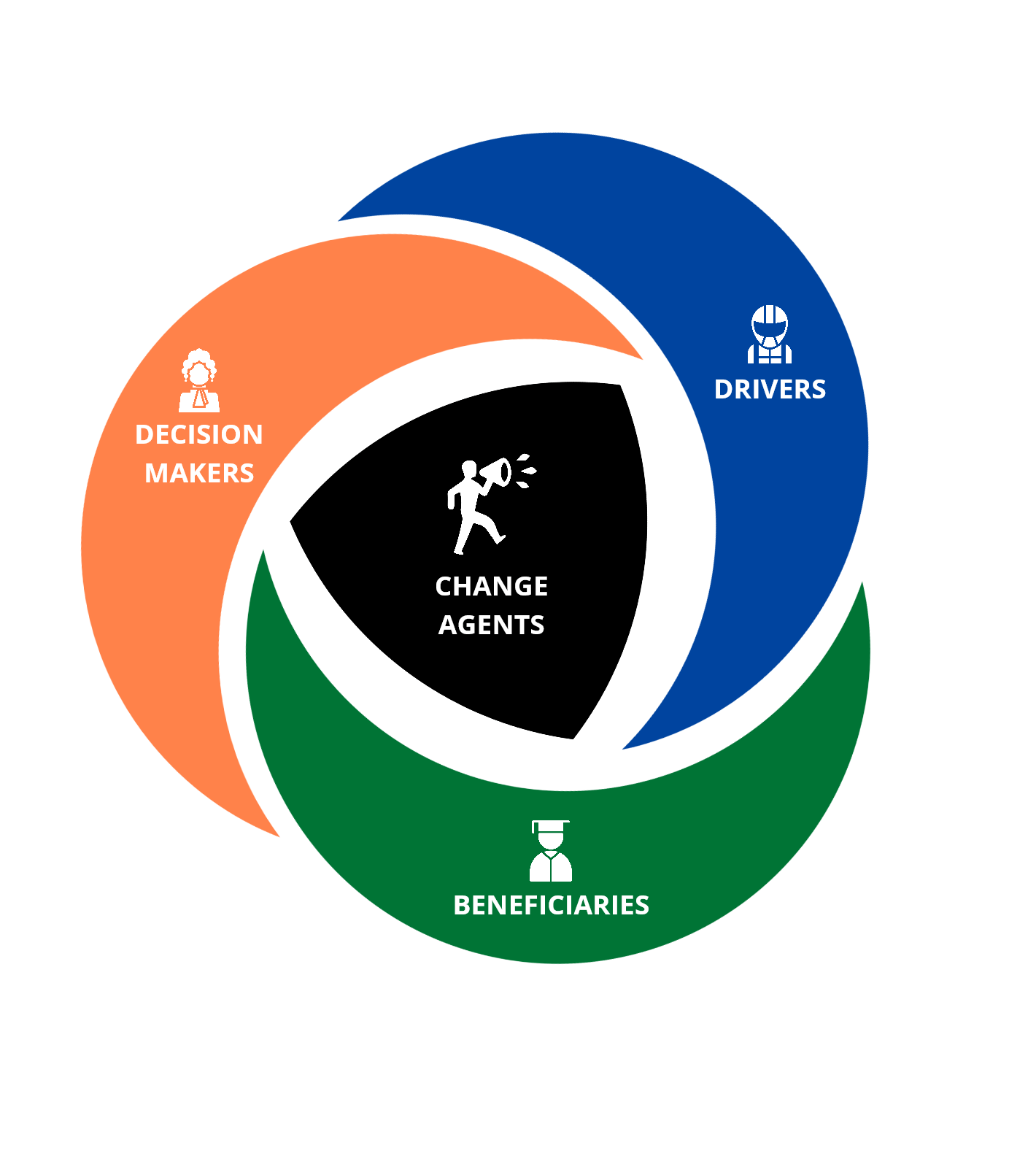
In any organization and change management process there really are four types of stakeholders that matter. Each plays a different role, and more importantly, each moves uniquely through the roadmap of transforming a business and a culture:
1. The Decision Makers
The people that approve it, call for change, and ignite the engine. They’re also gatekeepers with power to affirm or deny at important milestones along the roadmap. You’ll need them at key inflection points, and you’ll need to make them look successful. But don’t mistake authority for advocacy.
Stakeholder Risk:
Decision Makers are often the first to champion for change: sometimes before there’s even a plan. They carry weight, have early visibility, and often sponsor the effort outright by casting or commanding their vision. But their seniority can be deceiving. We confuse their enthusiasm for enduring commitment. We expect too much from them too soon which risks not only subverting the chance to build a coalition but ruin an opportunity entirely. The biggest trap? Mistaking a Decision Maker for a Change Agent. Influence without presence doesn’t carry change, it simply green-lights it.
2. The Drivers
These are the builders. They develop the systems, processes, workflows: the operational, insight-driven, technically capable plumbing of transformation and if you skip them, you don’t just slow change down. You sabotage it.
Stakeholder Risk:
Drivers often come in after the vision’s been sold and a plan has been developed, when the excitement is high and the timeline is… unrealistic. They're brought in for execution, not alignment, and because they ask hard questions, surface constraints, or push back on feasibility, they get mislabeled as blockers. But here’s the truth: they’re not resisting, they’re merely reacting to being excluded. Most Drivers are deep specialists, researchers, analysts, engineers—the people who actually make the thing work. Ignore them, and they don’t become detractors by nature, they become detractors by neglect.
3. The Beneficiaries
These people use the new vision & process, benefit from it, and are your last line of defense. They’re the ones meant to live and breathe in the transformed state. If they don’t see value in the future, they’ll cling to the past and drag everyone with them. When that happens only a Delorean can save you.
Stakeholder Risk:
Beneficiaries aren’t just your customers, they’re your internal workhorse: the people whose daily lives are supposed to get better. But too often they’re left out of the conversation entirely. We assume they’ll benefit from this, label them accordingly, and move on. But when people don’t know why they’re included, they don’t know how to care. When we fail to involve them meaningfully, we miss crucial feedback: blind spots, insights, and opportunities to make change stick. Resistance among would-be beneficiaries can halt adoption before it even has a chance to catch on.
4. The Change Agents (Your Core)
The catalytic center of gravity. Change Agents push progress forward in the spaces between meetings. They carry belief when it’s fragile. They speak up when the room gets quiet and they don’t need credit to keep moving forward.
But, and this is crucial, Change Agents don’t show up with name tags or job titles. They emerge over time through trust, traction, and the right milestones. If someone calls themselves a Change Agent on day one, that’s not a red flag, that’s a parade float.
Detractors Are Change Agents in Reverse
Now here’s where most transformation models go flat. We romanticize buy-in, isolate, and ignore the people that resist.
But the truth is, Detractors are a common part of every system, at the edge of the orbit, pulling people away from progress.
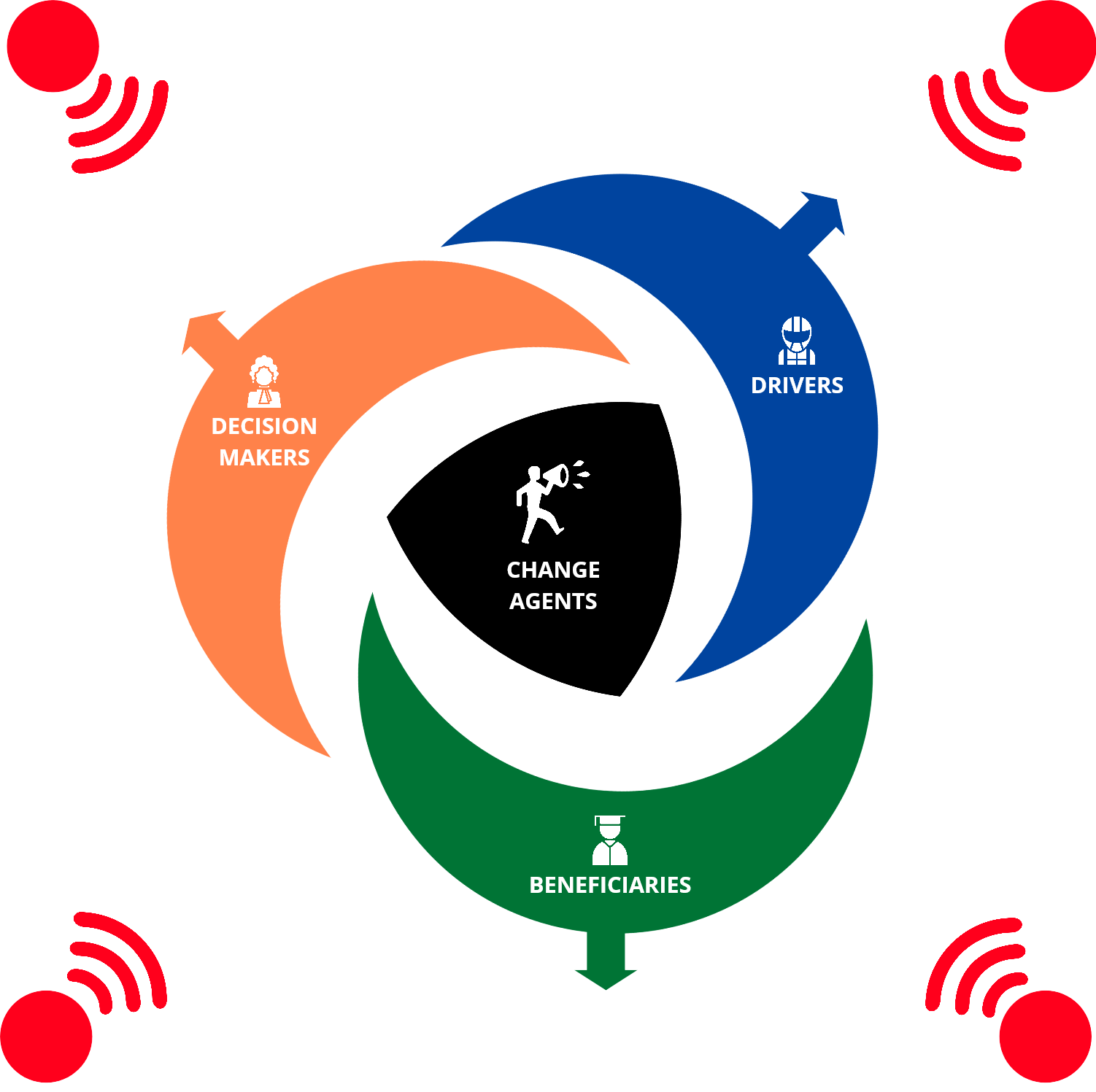
They’re not bad people, out to kill your ideas or scorch the earth.
They’re scared.
Or exhausted.
Or tied to an old way of working that used to make them valuable. Or better yet, they were burned trying to champion for change like this in the past.
Here’s what’s wild: Nearly all detractors were supposed to be Decision Makers, Drivers, or Beneficiaries. They didn’t start out as blockers. They fell out of alignment because they weren’t included, weren’t listened to, or weren’t given space to shape the thing they were later asked to sell.
So what do we do?
Bring them back.
Detractors are powerful because they have gravity, and too much of it eventually pulls our orbit apart and veers off-course. And people with gravity who feel excluded don’t go quiet, they go viral.
Ignore them, and they’ll undermine you from the edges-and when things get difficult, others will start to see more of themselves in the fringes, pulled by the gravity catching momentum from the corners.
Engage them, and some of them might just become your fiercest Change Agents.
The Coalition Principle: You Don’t Need a Hero
One of the deadliest assumptions in transformation work? Believing one passionate person can carry the weight. That’s just burnout wearing a cape.

You don’t need a hero. You need a coalition. And not a bloated committee of title-holders. You need a curated set of cross-functional, cross-seniority, cognitively diverse Change Agents who are:
Respected
Relatable
Hungry
And just pissed-off enough to want something better
The right number is some, not all. Too many and you create a power struggle. Too few and you collapse under the pressure. This is a symphonic orchestra, pick the right players and let them play.
The Traits That Matter Most
If you’re building your coalition, don’t just look for enthusiasm. Look for this:
Experienced enough to know the landmines
Not so jaded they’ve stopped trying
Respected enough to influence others
Present enough to still feel in the system
Resilient enough to stick with it when it’s messy
Empathetic enough to engage detractors without dismissing them
These are the people who will carry your vision when it’s not trendy, when the mood tastes sour, and when the hallway chatter gets cynical. They are the ones who hold the center.
So Here’s the Play
If you're serious about leading transformation:
Map your stakeholders. Know who’s a Decision Maker, Driver, Beneficiary. Know who’s drifting.
Seed ownership early. Use the endowment effect. Let people shape the work before they’re asked to support it.
Listen like it’s your job. Because it is. The Socratic Method isn’t cute, it’s essential.
Spot your Change Agents. Not by title, but by traction.
Watch your Detractors. They’re not the enemy. They’re a mirror.
Build the coalition. Curated. Diverse. Committed. Aligned.
Support it with structure. Momentum dies in ambiguity. Give your Change Agent’s role clarity, feedback loops, and leadership cover.
Change isn’t a campaign. It’s a culture shift and that doesn’t start at the top, it starts with a core.